Identify your body's limiting factors.
Most golfers spend years adjusting their technique around physical limitations they don't know they have. The TPI screen identifies exactly where your body is restricting your swing, and why.
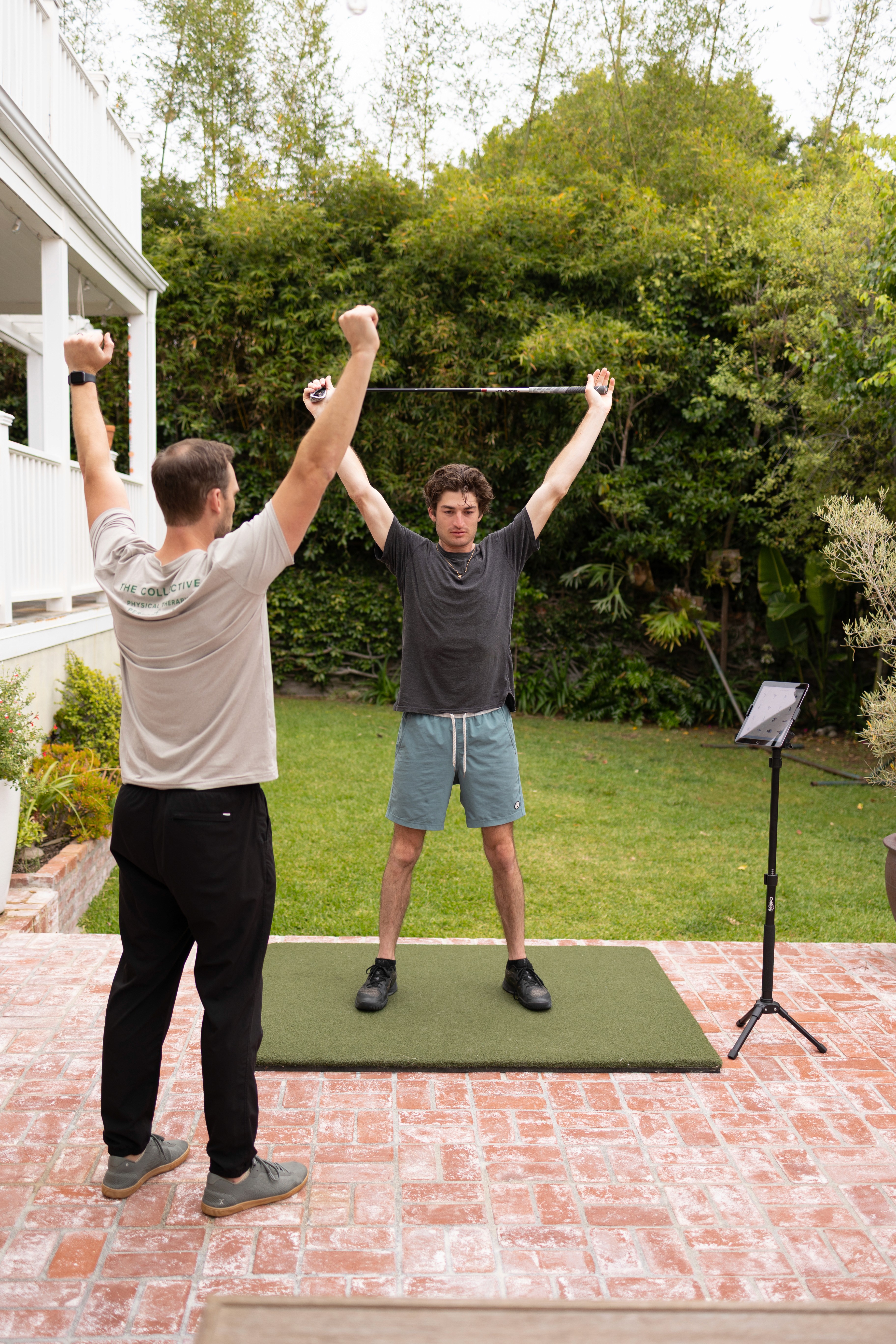
A physical screen built for golf.
TPI is the most widely used movement assessment in professional golf. It connects the sixteen physical qualities the golf swing demands to the swing characteristics they produce. When your body can't do something, your swing compensates. The compensation is visible. The physical cause is fixable. This isn't instruction. It's the clinical side of performance, identifying what your body is and is not allowing, and building a plan around it.
Golf coaches handle the software. We handle the hardware. See what your body is actually capable of.
Three parts, one session.
Body screen
A sixteen-point physical screen — mobility, stability, posture, and movement patterns the golf swing depends on. Done in your home or on the range.
Swing context
We connect what your body can and can't do to what your swing is doing. No coaching — we work alongside your coach, not in place of one.
Plan
A written, prioritized plan of corrective work, mobility, and strength — built around your screen, your schedule, and the season ahead.
What you get.
Sixteen-point TPI physical screen conducted by a TPI-certified clinician
Swing correlation: physical findings mapped to what they mean for your game
A written summary of findings and priorities
A corrective exercise and mobility plan, specific to your results
Coordination with your swing coach, on request
All equipment brought to you

For golfers who want to know why.
Struggling with a specific swing fault
S-posture, C-posture, early extension, over-the-top — most swing faults trace back to something physical. We find it.
Coming back from injury
Returning to golf after a back issue, hip surgery, or shoulder problem requires knowing what your body can and can't handle. The screen gives you and your care team a clear baseline.
Serious about improving
Handicap-driven golfers who want to remove the physical ceiling on what their swing can do.
Pain or discomfort during the swing
Low back, hip, shoulder, or elbow pain that flares with golf. The TPI screen identifies the physical contributors, and we can treat them.
Simple pricing.
One session. In your home, gym, or on the range. Includes the full sixteen-point screen, findings review, written report, and corrective plan.

Questions, answered.
Do I need to be a serious golfer to benefit from this?
No. The screen is useful for any golfer who plays regularly and wants to understand their body's relationship to their swing, whether you shoot in the 70s or the 100s.
Will you give me swing advice?
No. We're physical therapists, not swing coaches, and we don't cross that line. What we do is identify the physical factors influencing your mechanics and give that information to you and your coach.
Can this be combined with a PT session?
Yes. If the screen identifies issues worth treating, we can build a PT plan around the findings.
Where do you conduct the screen?
Wherever works for you, your home, a gym, or on the range. We bring everything needed.
How is this different from a regular PT evaluation?
A standard PT evaluation is built around symptoms and diagnosis. The TPI screen is built around golf-specific performance, identifying the physical qualities the swing demands and where your body is falling short, whether or not anything hurts yet.
Do you work with junior golfers?
Yes. The TPI screen is appropriate for junior athletes, and early identification of physical limitations is particularly valuable for developing players.