See what's happening. Not just guess.
Most physical therapists rely on what you describe and your physical exam. MSK ultrasound adds a third layer — real-time imaging of the tissue itself. Tendons, muscles, bursae, ligaments, and nerves, visualized as you move. Faster than MRI. No radiation. No referral required.
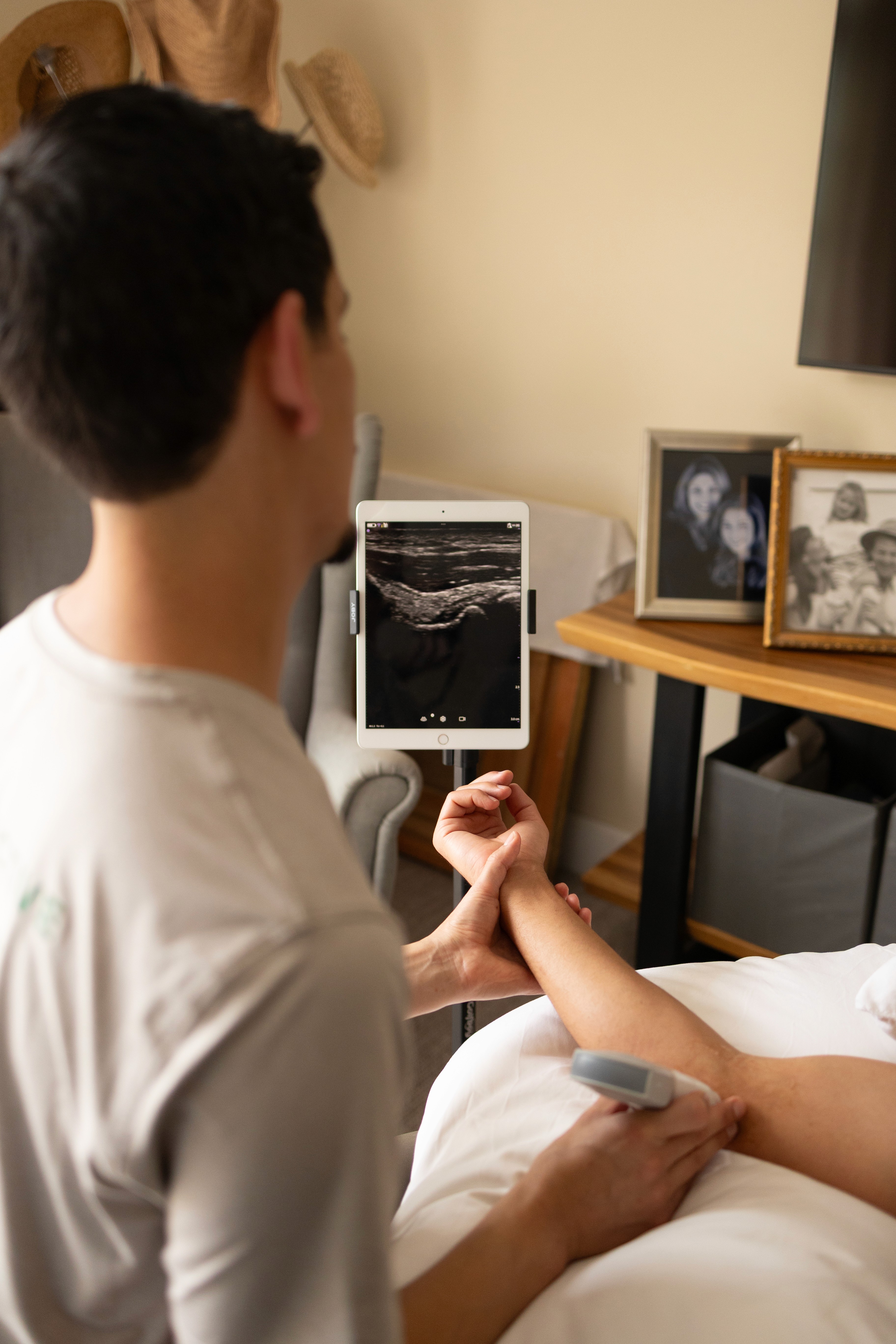
The structures we can see.
Tendons & Tendinopathy
Rotator cuff, Achilles, patellar, hamstring, and more. We identify structural changes, partial tears, and degenerative load patterns — before they become significant injuries.
Bursae & Soft Tissue
Swelling, thickening, and inflammation that don't show on X-ray. Common in shoulder, hip, and knee presentations that aren't resolving as expected.
Muscle Tears & Strains
Grade and location of muscle injuries — critical for accurate return-to-sport timelines and load management.
Ligament & Joint Assessment
Structural integrity of ligaments, growth plates, and joint capsules. Particularly useful for elbow, wrist, finger, and ankle injuries in athletes.
Nerves
Identifies entrapment, thickening, and positional changes that explain numbness, weakness, or pain patterns.
Dynamic Assessment
Life isn't static. Unlike MRI, ultrasound images tissue in motion. We can assess impingement, snapping, and instability as it actually happens — in the positions and movements that provoke it.
What you get.
A Registered Musculoskeletal Sonographer (RMSK®) performing and interpreting the scan
Real-time imaging reviewed with you during the session
A written summary of findings
Clinical context — what the imaging means for your treatment or training
Integration with your PT plan, if applicable
What it isn't.
A replacement for MRI or surgical consultation.
Ultrasound has limits. We'll tell you clearly when imaging findings warrant escalation — and refer you directly.
A diagnostic code for insurance.
We're cash-pay. We can provide documentation for your records or referring provider.
What to expect.
We bring the equipment to you
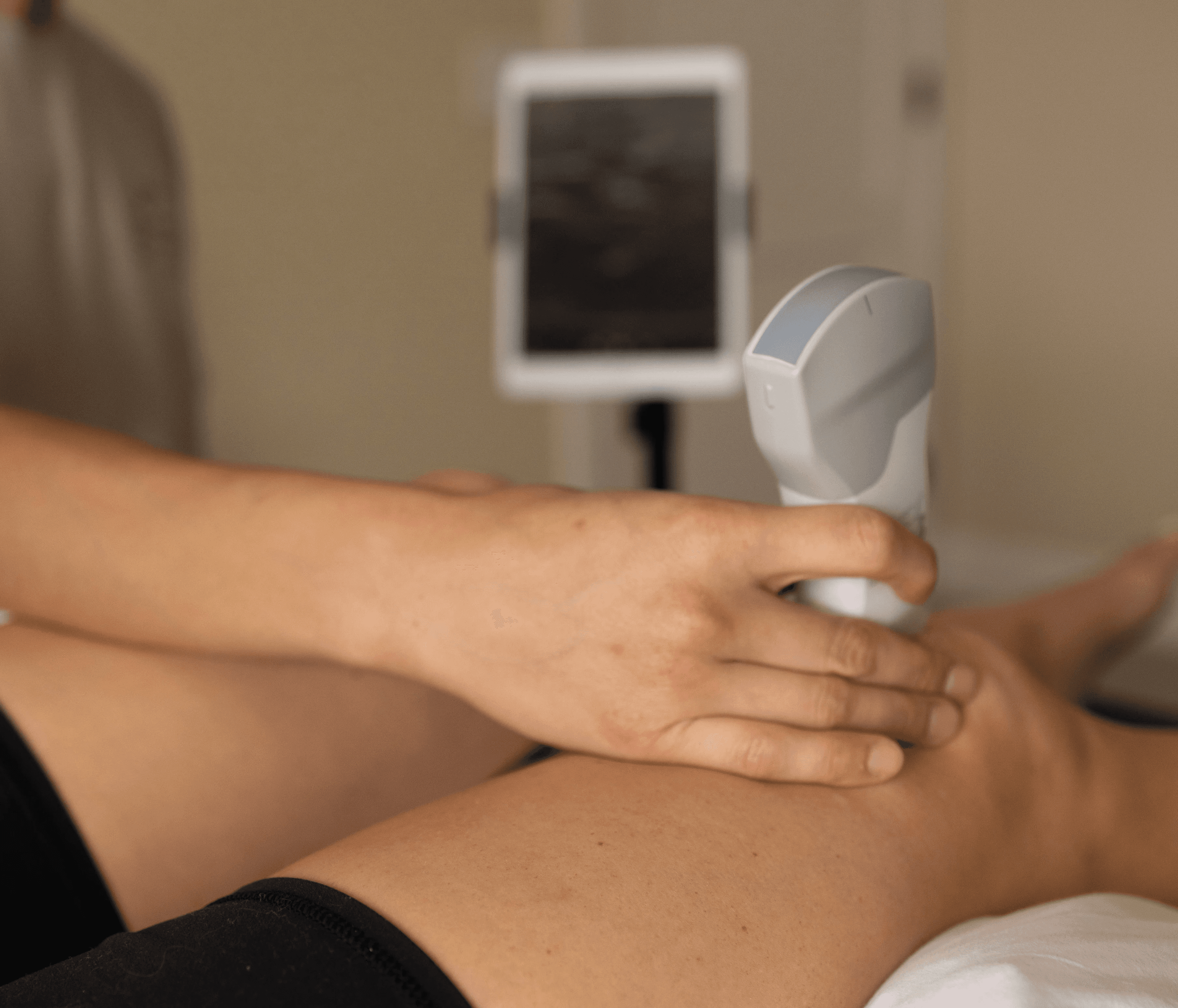
Portable, clinical-grade ultrasound — the same technology used in sports medicine clinics and hospital settings. No facility visit required.
A focused intake
We review your history, symptoms, and imaging goals before the probe touches skin. Ultrasound findings are only useful in clinical context.
Real-time imaging, explained as we go
You'll see what we see. We narrate the findings in plain language so you leave understanding your tissue, not just a report.
A written summary
What was imaged, what was found, and what it means — in writing.
Simple pricing.
Real-time imaging, findings reviewed on-site, written summary included.
Questions, answered.
Do I need a referral?
No. California allows direct access to physical therapy and MSK ultrasound without a physician referral.
How is this different from an MRI?
Ultrasound shows soft tissue in real time and in motion — something MRI can't do. It's also faster, more accessible, and appropriate for many soft tissue questions that don't require the detail of an MRI. We'll tell you if your situation warrants advanced imaging instead.
Is this the same quality as a hospital ultrasound?
Yes. We use clinical-grade portable ultrasound — the same equipment used in sports medicine clinics, orthopedic offices, and emergency departments. The difference is that we come to you.
Can ultrasound find a tear?
Partial and full-thickness tears of tendons and muscles are highly visible on ultrasound. Ligament integrity can also be assessed. For suspected labral tears, cartilage damage, or bone pathology, MRI or further workup may be needed — and we'll tell you so directly.
Who performs the scan?
Every scan is performed by a Registered Musculoskeletal Sonographer credential by ARDMS
What is the RMSK certification?
The RMSK (Registered in Musculoskeletal Sonography) is an advanced physician certification issued by the Alliance for Physician Certification & Advancement (APCA). It is the gold standard credential for clinicians who perform and interpret musculoskeletal ultrasound — validating both diagnostic precision and procedural competency.
How do you obtain the RMSK certification?
To earn the RMSK, a provider must: · Hold a valid, unrestricted medical license (MD, DO, DPM, MBBS, NP, PA, DPT, or PT) · Document a minimum of 150 musculoskeletal ultrasound studies within the preceding 36 months · Pass the APCA's comprehensive MSK written examination — a four-hour, ~200-question assessment covering diagnosis and invasive procedures To maintain the RMSK, providers must: · Earn 30 CME credits in musculoskeletal ultrasound every 3 years · Maintain annual attestation of good standing · Pay the associated renewal fee